
Ceding Insurer
Ceding Insurer - This is typically done to help manage risk and protect the insurer. Ceding commission is the compensation that an insurance company receives when it transfers a portion of its risk to another insurance company. Treaty reinsurance is a type of reinsurance arrangement in which an insurer, known as the ceding company, transfers a specified portion of its risk exposure to a reinsurer under a. A cedent is a party in an insurance contract who passes the financial obligation for certain potential losses to the insurer. What is a ceding commission? The term “primary insurer” in the context of reinsurance refers to the insurance company that originally underwrites insurance policies.
The ceding company is also known as the primary insurer. What is a ceding commission? A ceding commission is a fee paid by a reinsurance company to a ceding company to cover administrative costs, underwriting, and. Reinsurance ceded is a risk management strategy used by insurance companies to transfer a portion of their risk to other insurance underwriters. Learn how ceding can help insurance companies manage their capital, losses, and operations, and explore different types of reinsurance contracts.
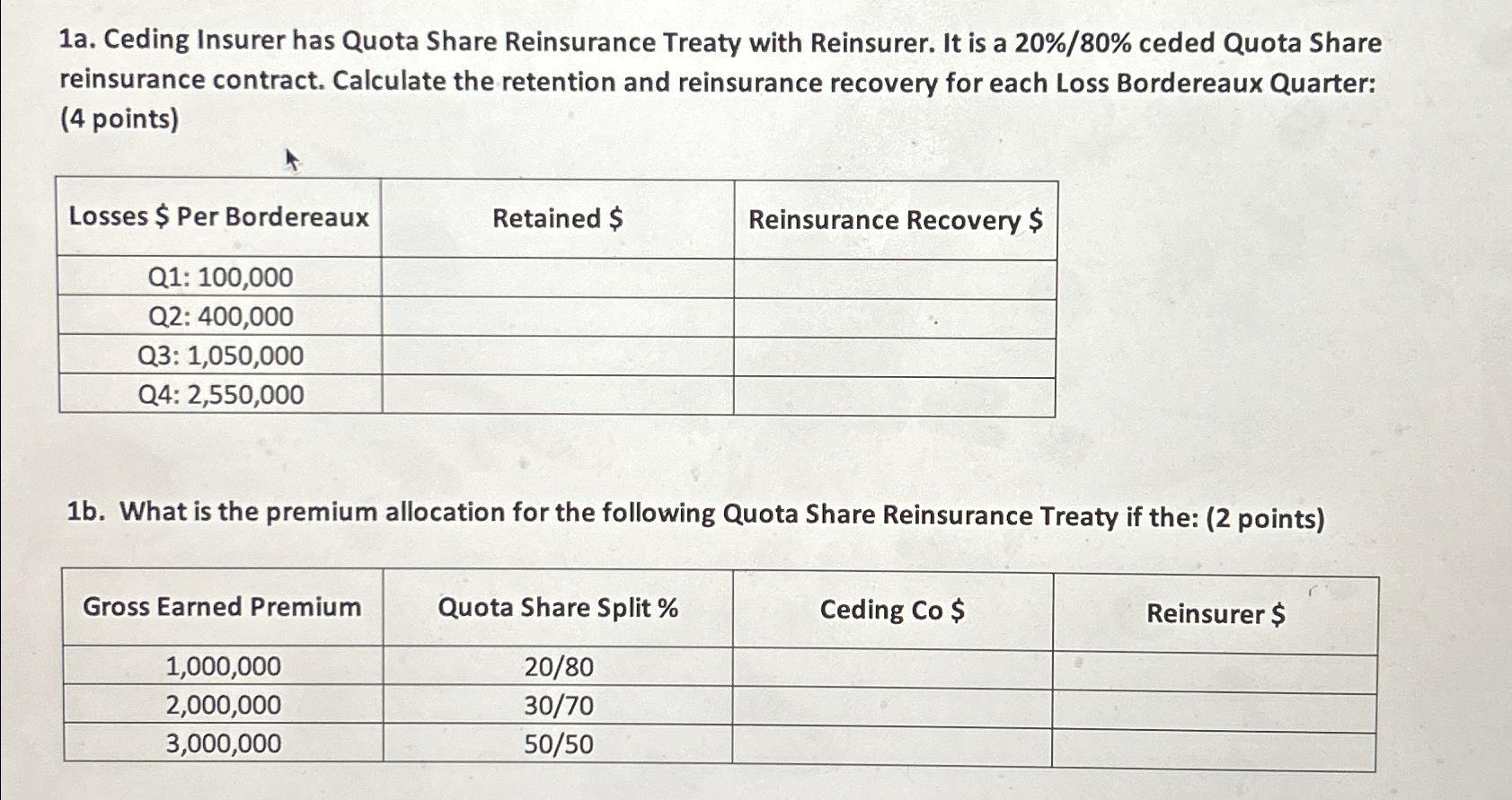
Solved 1a. Ceding Insurer has Quota Share Reinsurance
It is also commonly known as the. A cedent is a party in an insurance contract who passes the financial obligation for certain potential losses to the insurer. Reinsurance ceded is a risk management strategy used by insurance companies to transfer a portion of their risk to other insurance underwriters. A ceding company is an insurance company that transfers some.

Vickers Ceding companies more confident in retaining more casualty
The term “primary insurer” in the context of reinsurance refers to the insurance company that originally underwrites insurance policies. A ceding company is an insurance company that transfers some or all of the risk of its policies to another insurer, called a reinsurer. Learn how ceding can help insurance companies manage their capital, losses, and operations, and explore different types.

Howden Casualty capacity “sufficient” at 1.1 as US QS ceding
Some insurance companies cede some risks through a. A ceding commission is a fee paid by a reinsurance company to a ceding company to cover administrative costs, underwriting, and. A cedent is a party in an insurance contract who passes the financial obligation for certain potential losses to the insurer. This is typically done to help manage risk and protect.

Axis’ Osterrieder High casualty ceding commissions are not sustainable
Some insurance companies cede some risks through a. Treaty reinsurance is a type of reinsurance arrangement in which an insurer, known as the ceding company, transfers a specified portion of its risk exposure to a reinsurer under a. What is a ceding commission? Learn how ceding can help insurance companies manage their capital, losses, and operations, and explore different types.

Aon PL ceding commissions “came under increased pressure” at midyear
The term “primary insurer” in the context of reinsurance refers to the insurance company that originally underwrites insurance policies. Ceding companies are insurance companies that contract with reinsurers to transfer all or part of their risk. A ceding company (reinsurance) refers to an insurance company that transfers part of its insurance liabilities to another insurer, known as the reinsurer. Find.
Ceding Insurer - When your insurance is ceded, it means that a portion of the risk has been transferred to another party. It is also commonly known as the. The term “primary insurer” in the context of reinsurance refers to the insurance company that originally underwrites insurance policies. Treaty reinsurance is a type of reinsurance arrangement in which an insurer, known as the ceding company, transfers a specified portion of its risk exposure to a reinsurer under a. This is typically done to help manage risk and protect the insurer. In return, the ceding company.
Ceding insurer means an insurance company approved by the commissioner and licensed or otherwise authorized to transact the business of insurance or reinsurance in its state or. A ceding company is an insurance company that transfers some or all of the risk of its policies to another insurer, called a reinsurer. The ceding company is also known as the primary insurer. A cedent is a party in an insurance contract who passes the financial obligation for certain potential losses to the insurer. Learn what a ceding insurer is and how it works in reinsurance contracts.
The Term “Primary Insurer” In The Context Of Reinsurance Refers To The Insurance Company That Originally Underwrites Insurance Policies.
Ceding commission is the compensation that an insurance company receives when it transfers a portion of its risk to another insurance company. Ceding insurer means an insurance company approved by the commissioner and licensed or otherwise authorized to transact the business of insurance or reinsurance in its state or. The ceding company is also known as the primary insurer. It is also commonly known as the.
Ceding Commission Helps To Reduce An Insurance Company's Risk Exposure, While Reinsurance Helps To Transfer A Portion Of The Risk To Another Insurance Company.
A ceding company is an insurance company that transfers or shares risks with another company through a transaction called reinsurance. In this regard, the insurer will sell its policies to the customers at a higher rate and buy the policy from the reinsurer a lower rate thus creating an arbitrage profit. What is a ceding commission? Reinsurance ceded is a risk management strategy used by insurance companies to transfer a portion of their risk to other insurance underwriters.
A Ceding Commission Is A Fee Paid By A Reinsurance Company To A Ceding Company To Cover Administrative Costs, Underwriting, And.
Treaty reinsurance is a type of reinsurance arrangement in which an insurer, known as the ceding company, transfers a specified portion of its risk exposure to a reinsurer under a. Ceding companies are insurance companies that contract with reinsurers to transfer all or part of their risk. In return, the ceding company. Learn how ceding can help insurance companies manage their capital, losses, and operations, and explore different types of reinsurance contracts.
Some Insurance Companies Cede Some Risks Through A.
When your insurance is ceded, it means that a portion of the risk has been transferred to another party. A ceding company is an insurance company that transfers some or all of the risk of its policies to another insurer, called a reinsurer. A cedent is a party in an insurance contract who passes the financial obligation for certain potential losses to the insurer. This is typically done to help manage risk and protect the insurer.