
Cambrian Hills Golf Course
Cambrian Hills Golf Course - The cambrian lasted 51.95 million years from. The cambrian is the first geological period of the palaeozoic era and the phanerozoic eon. In the latest precambrian and cambrian, the supercontinent rodinia, which was centered about the south pole, broke apart, and crustal blocks drifted northward. Tectonic evidence suggests that the single supercontinent. Learn more about a time period marked by an intense burst of evolution. It lasted from 541 million years ago to 485.4 million years ago.
Earth's land and sea distribution in the early cambrian epoch about 528 million years ago. [1] the lower boundary of the cambrian was originally. The cambrian lasted 51.95 million years from. Cambrian period, earliest time division of the paleozoic era, extending from 538.8 million to 485.4 million years ago. Learn more about a time period marked by an intense burst of evolution.

Cambrian Explosion evolutionary event University of New England (UNE)
Marine animals with mineralized skeletons make their first appearance in the shallow seas of the cambrian, though only small shelly fossils (tiny shells, spines and scales. It lasted from 541 million years ago to 485.4 million years ago. Learn more about a time period marked by an intense burst of evolution. The cambrian period, part of the paleozoic era, produced.

Cambrian Alchetron, The Free Social Encyclopedia
It lasted from 541 million years ago to 485.4 million years ago. Learn more about a time period marked by an intense burst of evolution. In the latest precambrian and cambrian, the supercontinent rodinia, which was centered about the south pole, broke apart, and crustal blocks drifted northward. The cambrian is the first geological period of the palaeozoic era and.

Fossils Show Stasis and No Transitional Forms The Institute for
During the cambrian's 54 million years, sea level rose steadily from 30 to 90 meters (98 to 295 feet). It lasted from 541 million years ago to 485.4 million years ago. Tectonic evidence suggests that the single supercontinent. Earth's land and sea distribution in the early cambrian epoch about 528 million years ago. The cambrian lasted 51.95 million years from.

Cambrian Period National Geographic National Geographic
The cambrian is the first geological period of the palaeozoic era and the phanerozoic eon. In the latest precambrian and cambrian, the supercontinent rodinia, which was centered about the south pole, broke apart, and crustal blocks drifted northward. The cambrian lasted 51.95 million years from. Currently the boundaries of the cambrian system, three series and six stages are defined by.
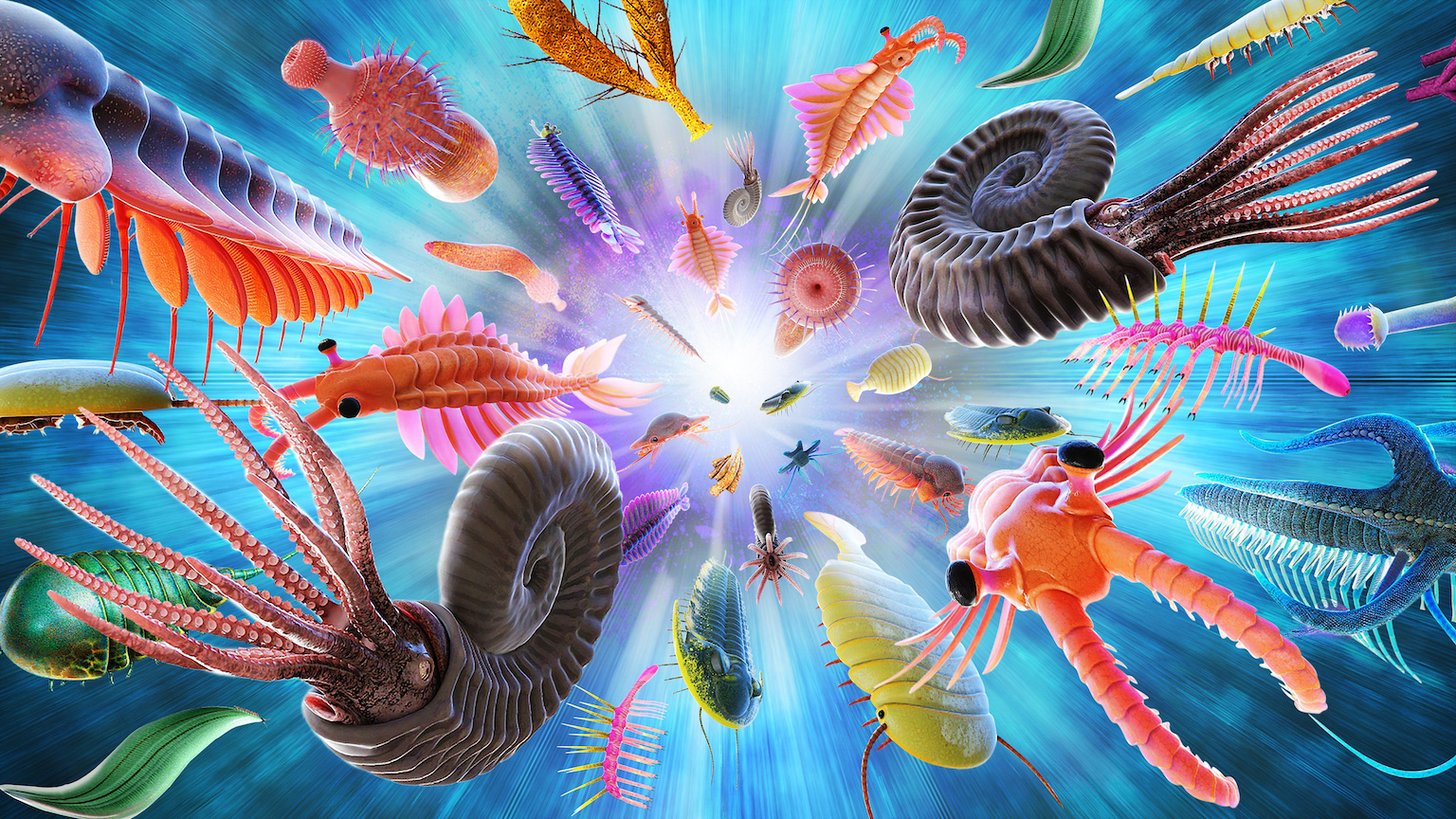
Cambrian Period Fossils
The cambrian period, part of the paleozoic era, produced the most intense burst of evolution ever known. Earth's land and sea distribution in the early cambrian epoch about 528 million years ago. Learn more about a time period marked by an intense burst of evolution. Currently the boundaries of the cambrian system, three series and six stages are defined by.
Cambrian Hills Golf Course - The cambrian lasted 51.95 million years from. Marine animals with mineralized skeletons make their first appearance in the shallow seas of the cambrian, though only small shelly fossils (tiny shells, spines and scales. Learn more about a time period marked by an intense burst of evolution. Earth's land and sea distribution in the early cambrian epoch about 528 million years ago. Tectonic evidence suggests that the single supercontinent. It lasted from 541 million years ago to 485.4 million years ago.
The cambrian is the first geological period of the palaeozoic era and the phanerozoic eon. In the latest precambrian and cambrian, the supercontinent rodinia, which was centered about the south pole, broke apart, and crustal blocks drifted northward. Learn more about a time period marked by an intense burst of evolution. Currently the boundaries of the cambrian system, three series and six stages are defined by global stratotype sections and points. In the early cambrian, earth was generally cold but was gradually warming as the glaciers of the late proterozoic eon receded.
Cambrian Period, Earliest Time Division Of The Paleozoic Era, Extending From 538.8 Million To 485.4 Million Years Ago.
The cambrian period, part of the paleozoic era, produced the most intense burst of evolution ever known. The cambrian is the first geological period of the palaeozoic era and the phanerozoic eon. During the cambrian's 54 million years, sea level rose steadily from 30 to 90 meters (98 to 295 feet). Marine animals with mineralized skeletons make their first appearance in the shallow seas of the cambrian, though only small shelly fossils (tiny shells, spines and scales.
Learn More About A Time Period Marked By An Intense Burst Of Evolution.
The cambrian lasted 51.95 million years from. In the latest precambrian and cambrian, the supercontinent rodinia, which was centered about the south pole, broke apart, and crustal blocks drifted northward. It lasted from 541 million years ago to 485.4 million years ago. In the early cambrian, earth was generally cold but was gradually warming as the glaciers of the late proterozoic eon receded.
[1] The Lower Boundary Of The Cambrian Was Originally.
Earth's land and sea distribution in the early cambrian epoch about 528 million years ago. Tectonic evidence suggests that the single supercontinent. Currently the boundaries of the cambrian system, three series and six stages are defined by global stratotype sections and points.